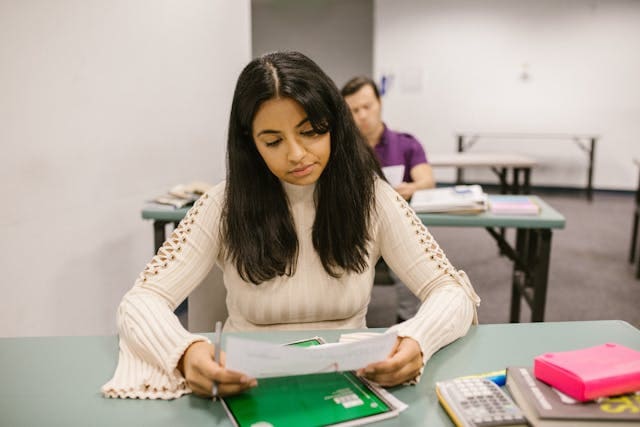

For many Singaporean parents, online tuition vs in-person tuition has become a genuine dilemma. This is especially true for parents of Sec 3–4 and JC students, where O-Level and A-Level results carry very real consequences.
On one hand, online classes promise convenience and less rushing around. On the other hand, physical classes feel “safer”—more structured, more disciplined, more familiar.
If you are feeling torn, you are not alone.
Instead of another generic pros-and-cons list, this article reframes the decision as a resource allocation strategy:
Where does your child get the best return on their limited resources—time, energy, and discipline?
Why “Which Is Better?” Misses the Point
Asking whether online tuition or in-person tuition is better oversimplifies the issue. Both formats can work very well, and both can fail if they are mismatched to the student.
What truly matters is fit. The real trade-off is not quality, but time versus discipline. When these two factors are balanced correctly, learning becomes far more effective.
The Hidden Cost Parents Often Miss: The 8-Hour Sleep Debt
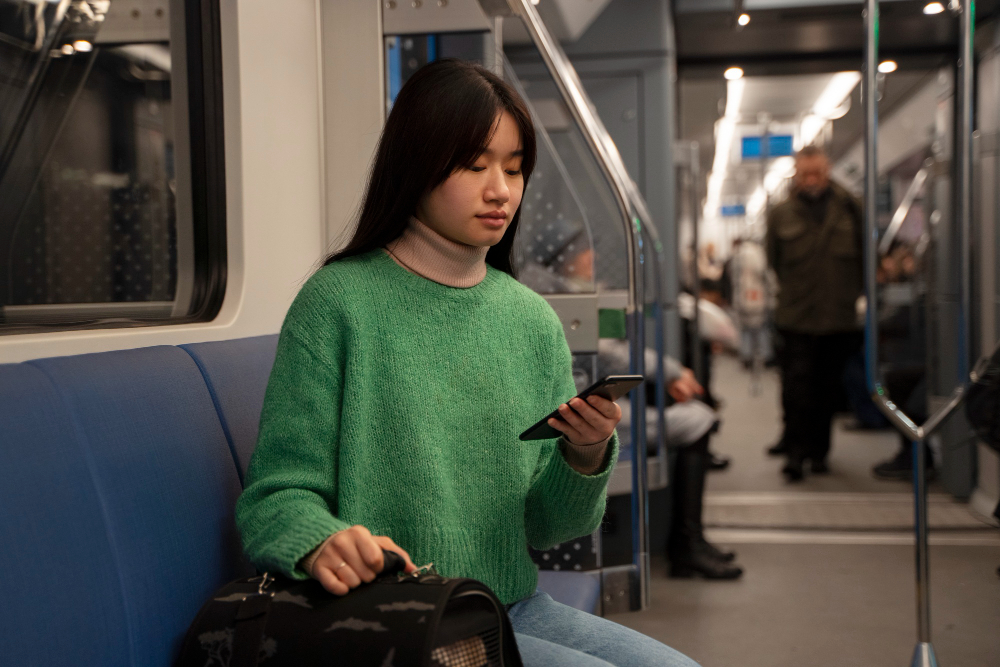
Photo by Freepik.
In Singapore, tuition does not happen in a vacuum. It happens after school, during peak MRT hours, in between CCAs, homework, and exams.
Let’s quantify what “going for physical tuition” often looks like:
- 30 to 45 minutes travelling each way
- Waiting time between school dismissal and class
- Late dinners
- Homework pushed past 10pm
That adds up quickly.
A conservative estimate:
- 1.5 to 2 hours per lesson, per week, spent purely on logistics
- Over a month: 6 to 8 hours
- Over an academic year: dozens of hours lost to travel alone
This is what many educators quietly refer to as sleep debt, and it could have been better utilised for:
- Proper revision
- Error analysis
- Earlier bedtimes (which directly affect memory and focus)
Online tuition, when structured well, removes this hidden cost entirely.
The Real Fear: “Online Means No Discipline”

Photo by Freepik.
Despite the convenience, many parents hesitate because they worry online tuition encourages distraction.
The fear of the “ghost student”—camera off, microphone muted, attention elsewhere—is very real.
However, this issue is not inherent to online tuition itself. It usually stems from poorly structured classes that rely too heavily on passive learning, such as recorded videos or large webinar-style sessions where students are not expected to participate.
What Disciplined Online Tuition Actually Looks Like
Effective online tuition is active, not passive. It typically includes:
- Compulsory camera-on policies
- Live questioning, not pre-recorded videos
- Real-time marking on tablets, so mistakes are caught immediately
- Cold-calling and participation tracking, similar to a physical classroom
- Small class sizes, where students cannot “hide”
When these structures are in place, attention levels can match—or even exceed—physical classes.
The myth that “online tuition = no discipline” usually comes from experiences with:
- Large webinar-style classes
- Recorded lessons without accountability
- Platforms that prioritise convenience over pedagogy
The Opposite Myth: Physical Classes Always Produce Better Results
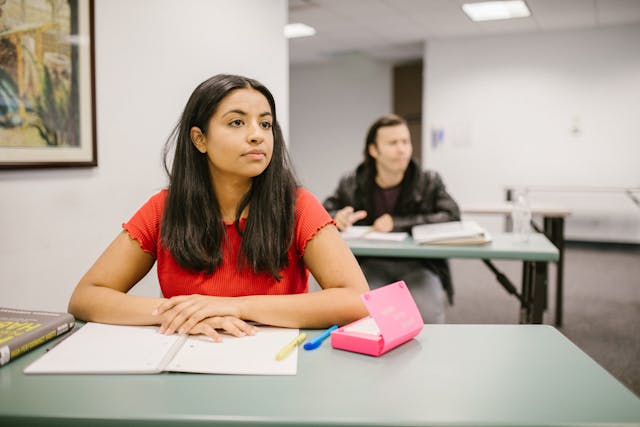
Photo by Pexels.
Physical tuition has real advantages—but it is not a guaranteed shortcut to grades.
In-person classes can still fail when:
- Students are exhausted after travelling
- Class sizes are too large
- Time is lost settling in, packing up, or waiting for late arrivals
- Lessons become teacher-led rather than student-engaged
Presence does not equal focus.
A tired student sitting in a classroom is not necessarily learning more than an alert student engaging actively online.
The Discipline Profile: Matching the Mode to the Student
Rather than choosing a format based on perception, it is more productive to consider your child’s discipline profile.
Some students are relatively self-directed. Once expectations are clearly set, they can follow routines, respond well when questioned, and stay engaged even in a home environment.
These students often benefit from online tuition, especially when it saves them from unnecessary exhaustion.
Other students require stronger external supervision. They may be easily distracted at home or struggle to separate study time from rest time.
For these learners, physical tuition provides a clearer structure and learning boundary.
Neither profile is better than the other. The key is recognising which environment allows your child to function at their best.
Head-to-Head Comparison: Online vs In-Person Tuition
Factor | Online Tuition | In-Person Tuition |
Cost (Time vs Money) | Saves travel time; fees reflect teaching expertise | Higher time cost due to travel; similar fee range |
Focus | High when structured with active engagement tools | High when class sizes are small and students are rested |
Discipline | Requires strong systems (camera-on, live marking) | Naturally enforced by physical presence |
Energy Levels | Students start lessons less fatigued | Fatigue may set in after long school days |
Best For… | Self-directed or busy students; families facing logistical burnout | Students needing close supervision or learning separation |
Interested in our Small Group Tuition?
Our classes are led by Ms. Irene Liu, an educator with over 10 years of teaching experience and has authored assessment books now used in schools! She's helped countless students make dramatic grade improvements – from failing grades to A2s.
What Ms. Liu provides:
✅Standard answer booklet
✅Keywords training
✅High frequency questions training
✅Paper 3 practical exam training
✅Frequent topical tests and mock exams
WhatsApp UsDebunking the Price Myth: Why Quality Costs the Same
Some parents assume online tuition should be cheaper because there is “no classroom”.
In reality, the cost of premium tuition lies in:
- The teacher’s expertise
- Lesson design and preparation
- Diagnostic marking and feedback
- Curriculum alignment with O-Level and A-Level requirements
Rental space is only one small component.
High-quality online tuition still requires:
- Professional-grade tablets and software
- Structured lesson plans
- Smaller class sizes to ensure interaction
This is why reputable centres price online and in-person classes similarly. The value is in the teaching, not the room.
A Middle Ground: The Hybrid Approach
For parents who remain unsure, a hybrid model can offer reassurance. This may involve several weeks of online lessons followed by a physical session, or periodic in-person check-ins alongside online teaching.
Hybrid arrangements reduce weekly logistical stress while maintaining accountability and personal connection. For many families, this approach provides confidence without forcing a full commitment to one format immediately.
Related: Group Tuition vs Private Tuition in Singapore: Which Is Better for Your Child?
Why the Singapore Context Matters
Choosing tuition in Singapore is never just an academic decision. Parents juggle peak-hour commutes, work responsibilities, and multiple children’s schedules. Recognising these realities is not about lowering expectations, it is about creating sustainable routines that students can maintain throughout the academic year.
Consistency, not constant rushing, is often what leads to better outcomes.
So, Which Should You Choose?
Photo by Pexels.
There is no universally “better” option.
The right choice is the one that preserves your child’s energy, matches their discipline needs, and reduces unnecessary stress at home—while still delivering consistent academic progress. When chosen thoughtfully, both formats can lead to strong O-Level and A-Level results.
If the daily logistics already feel overwhelming, it may help to ask not which option sounds safer, but which one allows your child to show up focused and ready to learn, week after week.
That answer is often clearer than it first seems.
Related: The Irene Biology Method: How Our Exam-Focused Approach Differs from School Teaching
More Than a Tuition Centre: A Learning Partner
At Irene Biology Learning Centre, both online and in-person tuition are offered because students learn differently. Online classes are designed with discipline in mind, using compulsory camera-on policies, live tablet teaching, and real-time interaction to ensure active participation.
For parents who are undecided, trial classes and consultations allow families to assess which format suits their child best before making a long-term commitment.
Find Us At:
#03-29 Singapore Shopping Centre, 190 Clemenceau Ave, Singapore 239924 (Exit B, Dhoby Ghaut MRT)
144 Upper Bukit Timah Road , Beauty World Centre #03-34 Singapore 588177
Enrolment & Enquiries:
Visit our website or Whatsapp us at +65 90857156 to secure your spot.
FAQs
1. At what age or level should students start tuition for Biology?
There is no single “correct” age, but many students benefit from starting Biology tuition from Sec 3 onwards, when the syllabus becomes more content-heavy and application-based. For JC students, early support can be especially helpful as concepts build rapidly and gaps can widen quickly if not addressed.
2. How large are tuition class sizes, and why does this matter?
Class size directly affects how much individual attention a student receives. Smaller classes allow teachers to identify misconceptions early, provide targeted feedback, and adapt explanations in real time. This can be particularly important for Biology, where misunderstanding one concept can affect several topics.
3. How can parents track whether tuition is actually helping?
Progress can be monitored through regular assessments, improvement in school test results, and increased confidence when answering structured and application-based questions. Parents may also notice changes in study habits, such as better organisation or more purposeful revision, which often signal effective learning support.
4. Is tuition still useful if my child already scores well in Biology?
Yes. For stronger students, tuition can shift focus from content coverage to exam strategy, higher-order application questions, and consistency under timed conditions. This is especially relevant for O-Level and A-Level examinations, where small mistakes can significantly affect grades.
5. How long should students attend tuition before expecting results?
Meaningful improvement usually takes time. While some students may see early gains in understanding, sustained progress typically becomes clearer after several months of consistent lessons, practice, and feedback. Tuition works best as a structured, long-term support rather than a last-minute solution.